

One network broke, but not all of them
On the morning of Wednesday 8 July 2026, a large part of Australia found out how much of ordinary life runs across one company's network. Triple Zero calls dropped for some callers. Victoria's V/Line trains stopped. Cafes and taxis couldn't take a card. It lasted the best part of a working day.
And yet the broader internet didn't go with it. The reports were of mobile signal, mobile data, and calls, and we couldn't find any report of NBN or fixed-line home broadband going down alongside them. Absence of reports isn't a formal all-clear, so we won't overstate it, but the pattern was consistent. If you were sitting at a desk on fixed-line broadband, there's a fair chance the first you knew of it was someone next to you swearing at their phone. That gap, between a telco on its knees and a fixed-line connection that carried on, is the useful thing to understand, because it's the same gap that decides how a national carrier fault touches your servers.
If you run servers, your own or a client's, the honest first thing to say is that even Australia's largest telco can break, and no amount of choosing where a server lives makes you immune to that. We sell colocation, so the tempting move here is to tell you a data centre would have saved you. On this fault it wouldn't have. What a data centre changes is narrower and more specific than the sales version, and it's worth being straight about where the line actually falls.
We are Rackmill, a Perth hosting operation. We run our own gear at Equinix PE2 in Shenton Park and we colocate other people's there too, so we have a stake in where your servers live.
What actually failed
Telstra's mobile network went down, and the company's own account (opens in new tab) traces it to a single device that keeps time synchronised across parts of that network. It started around 4:30am AEST and was mostly resolved by about 4pm, SBS News reported (opens in new tab): roughly a twelve-hour event. The fixed-line internet, the part that carries most servers, was not what broke.
That distinction is the whole story for anyone running infrastructure. iTnews reported (opens in new tab) the outage plainly as Telstra's mobile network struggling with voice and data, phones dropping into SOS mode, and the breakdown SBS published from DownDetector was almost all mobile signal, mobile data, and voice calls.
That's the shape of it. The internet isn't one company's network. It's thousands of them, wired together, and a website on a fixed-line, properly connected server reaches you over paths that never touched Telstra's mobile towers. What went dark on 8 July was the mobile layer and the things that lean on it. A phone with no bars, a card terminal failing over to 4G, a train system talking to its signals over a mobile link. On the reports we could find, the fixed-line paths underneath carried on.
Take that cause as Telstra's own account, though, not settled fact. Its chief financial officer said a software defect stopped time synchronisation working as it should in nodes in its Sydney and Melbourne data centres, and the company ruled out a cyberattack, as Cyber Daily reported (opens in new tab) in its round-up of the official and expert response. The communications regulator, the ACMA, has said it will run a full investigation, so the final word on cause isn't in yet. On scale, Telstra wouldn't put a firm number on affected customers. Its CFO said it could be tens of thousands but was more likely in the thousands, per WhistleOut's coverage (opens in new tab). Telstra has around 25 million mobile services, but that's the size of the base, not the count knocked offline.
The knock-on effects reached a long way past anyone's phone. Some Telstra customers couldn't reach Triple Zero, though the Communications Minister, Anika Wells, was careful to call it a Telstra retail outage rather than a Triple Zero outage. Victoria's V/Line suspended every route, stranding a network that carries around seventy thousand people on an ordinary day. The payments provider Tyro, used by about eighty thousand businesses, went down for the ones connecting over 4G, which The Register documented (opens in new tab) along with the courts and cafes caught out. None of those systems live in a server room. They failed because the carrier underneath them failed.
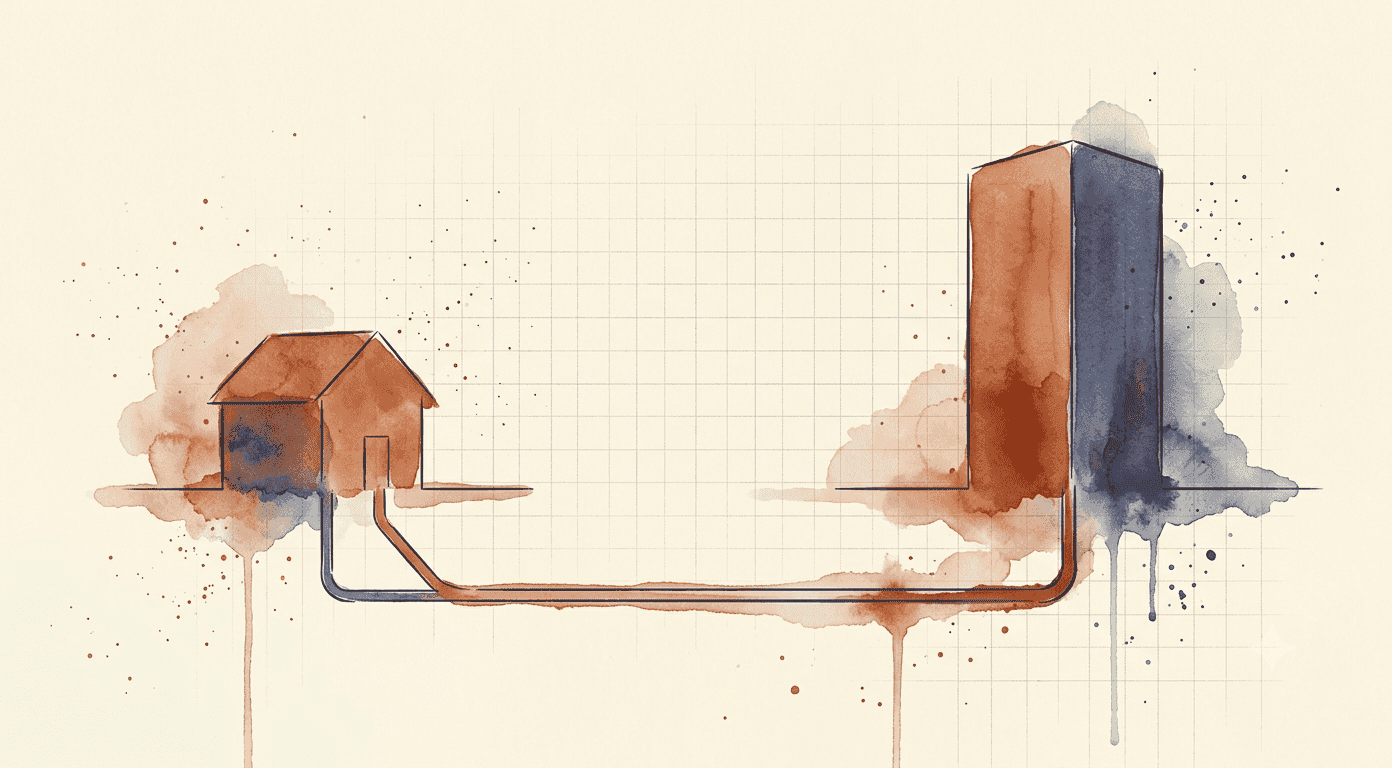
What a data centre doesn't guarantee
Here is the uncomfortable bit for a colocation provider to write down. If your problem on 8 July was that your staff phones, your card terminal, or your mobile-connected site had no signal, moving a server across town to Equinix PE2 fixes none of it. The failure was upstream of everyone. It sat in the carrier, and the carrier is a layer that a business on-premises and a business in a data centre both depend on.
That's the shared failure domain, and it's the point the honest version turns on. A server in your office and a server in our racks are two different bets about power and cooling and physical security. On the carrier question they can be the same bet, if both of them route out through the same single provider.
The commentary that came out of the outage landed on the same spot. The Australian Catholic University academics writing in The Conversation (opens in new tab) argued that essential services should not depend entirely on one carrier or one communications technology, and that a telecoms failure can spread across otherwise unrelated sectors. That is the general lesson, and it turns on which networks you depend on. Where your servers physically sit is a different question.
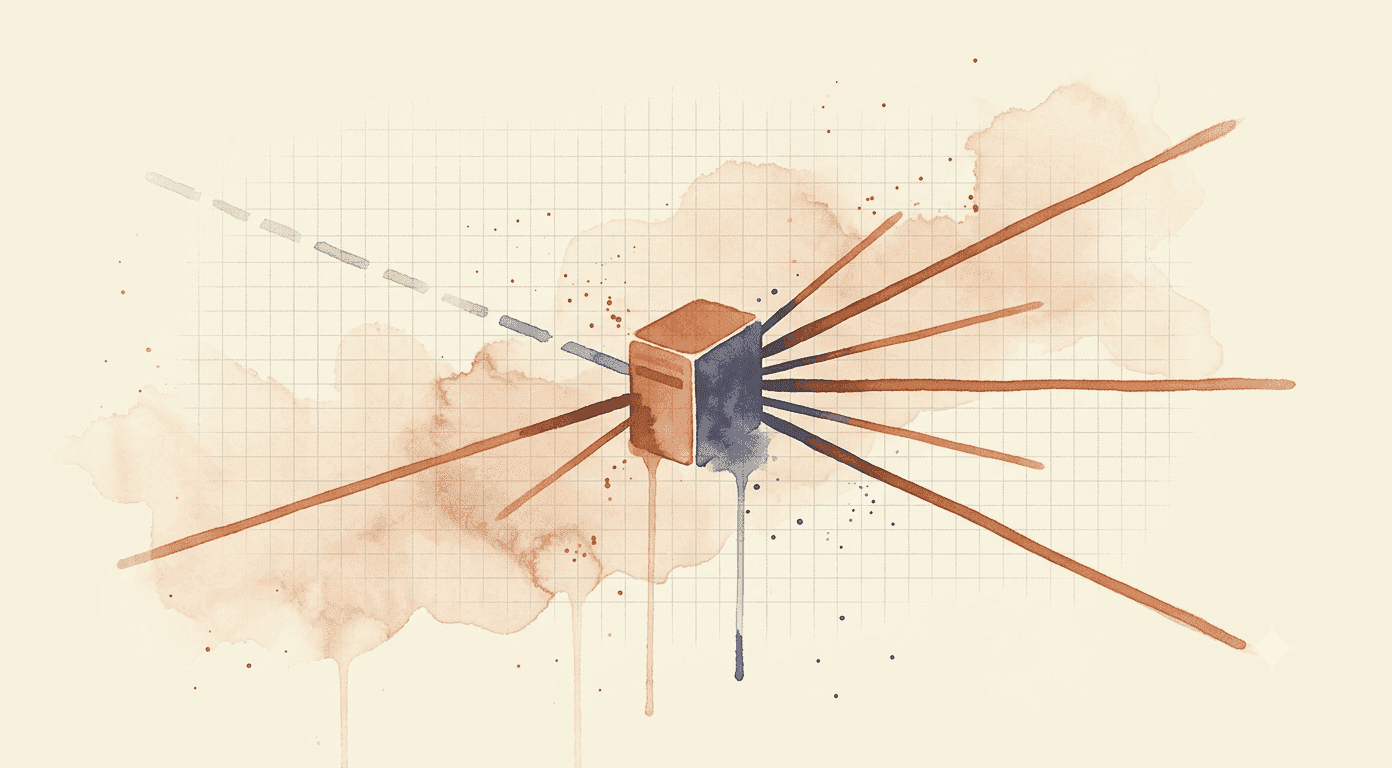
One bet wearing two coats
So does a data centre matter at all here? On this fault, at one layer only: the network diversity underneath the building, which does more than the building itself.
Jason Pearce of the security firm Claroty, quoted by SecurityBrief (opens in new tab), put the real risk plainly: resilience can't rely on a second service that shares the same underlying carrier. This is the trap most small setups fall into without knowing it. Two internet connections sound like redundancy, but if the second one is a mobile failover on a network that resells the same physical carrier, or two SIMs that both ride the same towers, the two coats are hiding a single bet. When the carrier goes, both halves go together.
Genuine diversity means reaching the internet through more than one independent path, and that's the thing a proper facility can hand you that a single office line usually can't. What we run at Equinix PE2 is our own network, not a reseller's. Rackmill holds its own autonomous system number, AS154167, and its own block of IPv4 addresses, and it reaches the wider internet over two separate 10 Gbps transit providers plus peering at the West Australian Internet Exchange. If one of those upstreams has a bad day, the traffic has somewhere else to go.
Be careful what that does and doesn't claim. It doesn't mean we'd have sailed through 8 July untouched. Telstra's fault was inside Telstra's own network, a different animal from one of our transit carriers failing. What the arrangement addresses is the more common risk underneath most small setups. If the way you reach the world is a single carrier, that carrier is a single point of failure, and more than one path is how you stop it being one. After the week Telstra just had, that is as far as any honest promise goes.
The trains make the point better than any diagram, and there's a neat east-versus-west contrast hiding in the day. Victoria's V/Line suspended every route because its trains talk to their control centres over the mobile network, and SBS explained (opens in new tab) that the state rail agency VicTrack uses the Telstra network to do it. When that network went, the trains lost the link they run on and had to stop. A train network isn't a flimsy operation, and it still went down, because at one layer it was making a single-carrier bet without meaning to.
Western Australia sits on the other side of that bet. Perth's rail system doesn't talk to its trains over a retail mobile carrier the way Victoria's does. The Public Transport Authority runs its own radio network, and iTnews reported (opens in new tab) it's replacing that with a private, mission-critical LTE system across more than 160 of its own radio sites. We haven't found a source on exactly how Perth's trains fared hour by hour on 8 July, so we won't claim they sailed through untouched. The structural point holds regardless. A fault inside one retail carrier's network has no obvious road into a rail system that was never riding on that carrier. Same country, same day, and a design decision made the difference.
Where does this leave us?
The honest response to a day like that isn't to find a vendor who promises it'll never happen again. It's to look at your own setup and ask the question the outage asked for you. If your one carrier disappeared for twelve hours tomorrow, what stops, and what keeps running on a second, genuinely separate path?
For a lot of small operations the honest answer is that a data centre wouldn't have changed the worst of last Wednesday, because the worst of it was phones and card machines, and those live on the mobile network regardless of where your server sits.
Where colocation earns its keep is quieter than that. A second, genuinely independent path out of your office is something you can build yourself, and if uptime is your business it may be worth doing. It's also fiddly and not cheap to do properly. You need a real second line, not a mobile failover that quietly rides the same carrier, and a router configured to switch over cleanly the moment the first one drops. The difference a data centre makes is that this comes as standard, built and tested by people who do only this. You're not the one sourcing two carriers, running the failover, and checking it still works. You inherit a network that already has more than one way out.
If you want to work out where your own single points of failure actually are, the carrier layer included, tell us what you run and how it connects, and we'll give you a straight read, including the parts a data centre wouldn't fix. The numbers and the network details are on our colocation page.