
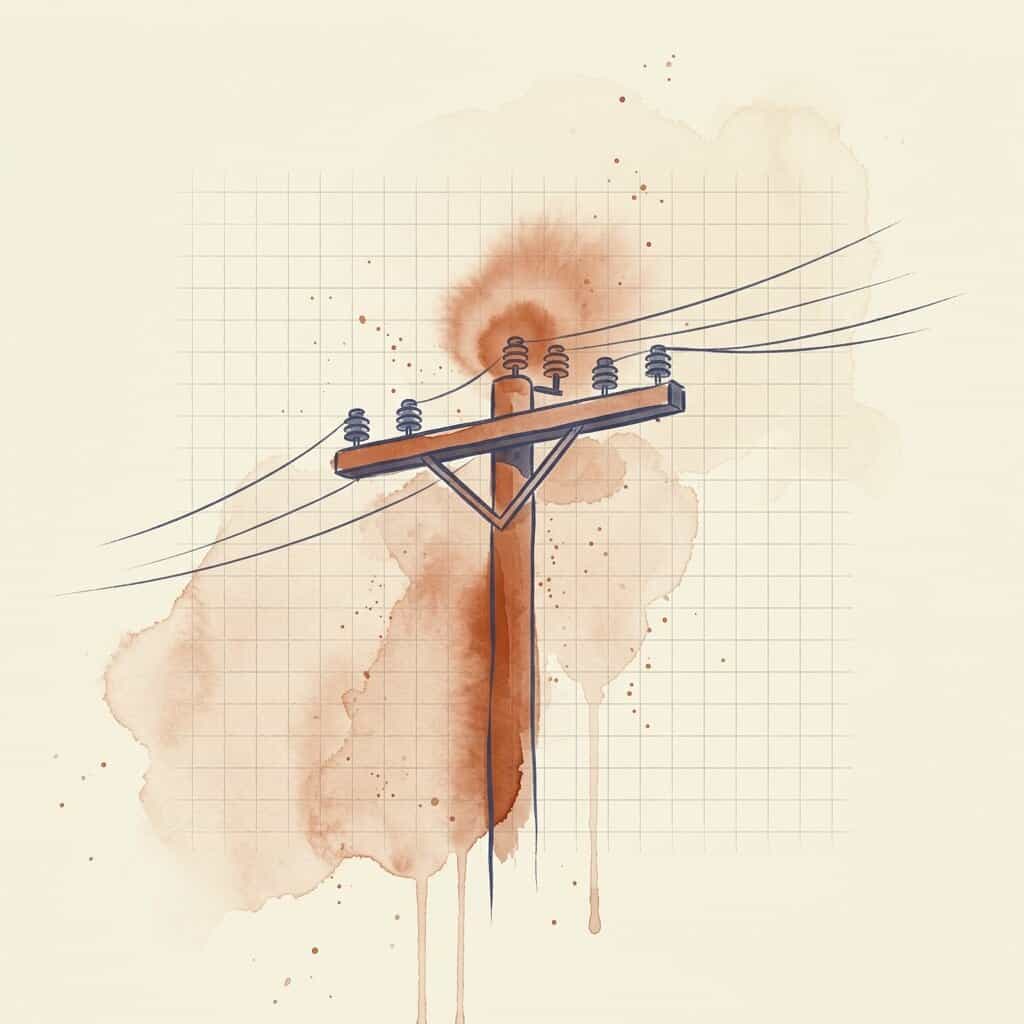
The grid that burns
You already know a single power feed is a single point of failure. You have said it to clients. The thing worth knowing is what Western Australia stacks on top of that, because it is not in the resilience checklist anyone hands you.
On 4 March 2024, around seventy pole-top fires broke out across the Perth metro inside a few hours. Western Power reported (opens in new tab) that at the peak, around 47,000 customers were impacted. Some pockets stayed dark for fifty-four hours. No storm, no substation fault. Dust had built up on the insulators through a long dry spell, and when light drizzle moved through, the grime started conducting across itself until the pole tops caught.
Your hardware was fine. Your feed was not, and from the office there was nothing to do but wait.
We are Rackmill, a Perth hosting operation. We run our own gear at Equinix PE2 in Shenton Park and colocate other people's there too, so where this grid is brittle is our daily business.
The failure mode is particular to here
A pole-top fire is the network cooking itself. Bushfires are a different thing and should be named as what they are: the 2021 Wooroloo fire destroyed eighty-six homes (opens in new tab) and burned through more than ten thousand hectares of the Perth Hills, and if you are somewhere fire-prone, the plan that matters is the one that gets people out. What follows is the smaller question of where a machine sits.
The recipe is specific: a hot, dry, dusty run lays a film of grime over the insulators, then a damp, misty change rolls in. Heavy rain would wash the contamination off. A fine mist instead makes it conductive, and the current starts tracking across the dirty insulator, heats the steelwork, and lights the pole top. Western Power describes (opens in new tab) the same sequence, noting that while heavy rain can wash contaminants away, "light mist or drizzle provides just enough moisture to activate conductive tracking". RMIT's engineers put it (opens in new tab) in one line: dust and pollution on the insulators "enables electricity to spark and heat metal fixtures that can cause wooden power poles to catch fire".
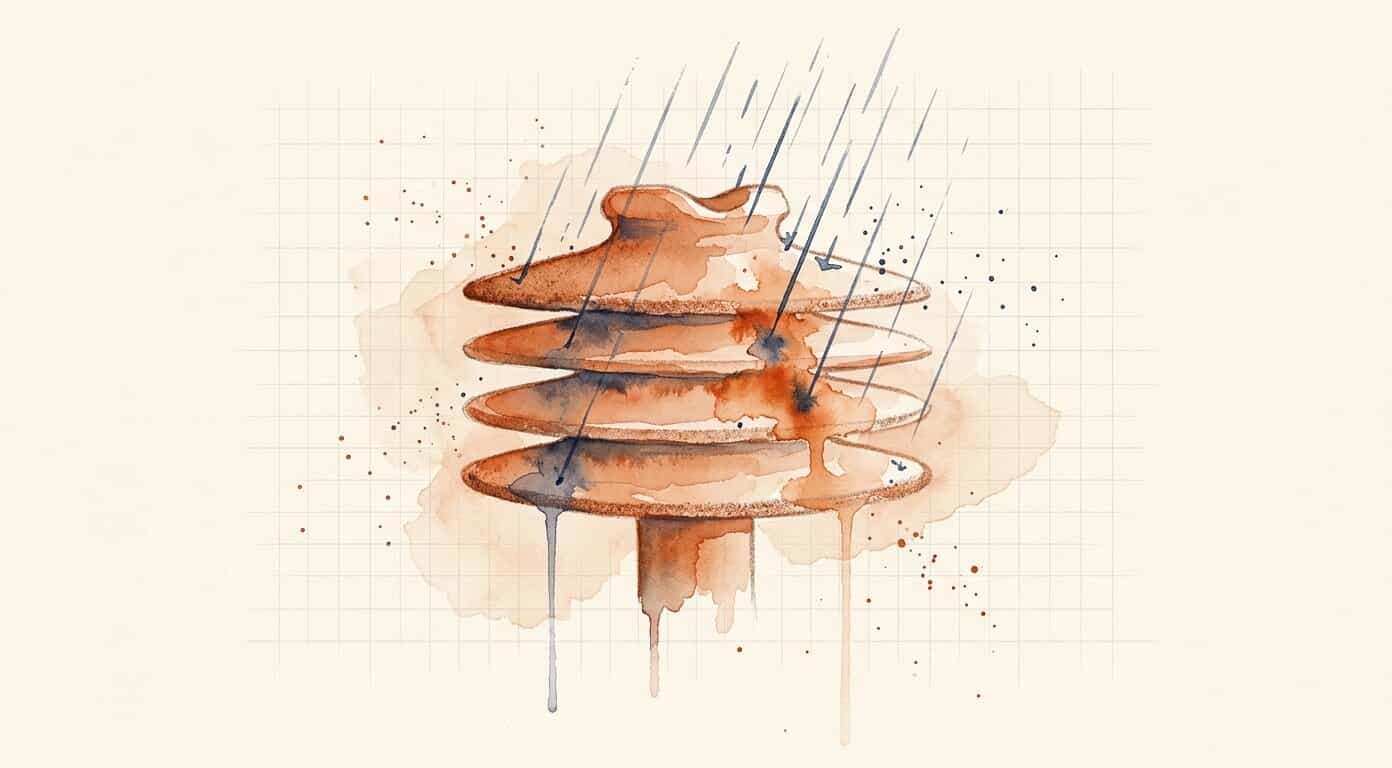
The climate does the rest. Perth had just 21.8 millimetres of rain in the six months to March 2024 (opens in new tab), the driest such spell in 150 years of records, which is exactly the dry loading the mechanism needs. The following summer brought two more. In January 2025, the ABC reported (opens in new tab), drizzly overnight weather triggered pole-top fires that cut power to 39,000 homes and businesses. Then a year to the day after the first (opens in new tab), on 4 March 2025: fifty-one fires in one night, peaking at 40,000 customers.
Three metro-wide events across two consecutive summers, and then a quiet one. No event on that scale has been reported since March 2025. That is worth saying plainly, because it is the shape of the risk rather than an argument against it: this is a seasonal failure mode that needs a dry build-up and then a damp change, so it arrives in summers rather than on a schedule. A quiet summer is weather, not a fix. The dust still settles and the poles are the same poles.
This is the grid the office feed hangs off. We have written before about why an isolated grid has no margin to lend; what matters here is narrower. In 2024/25, WA's Economic Regulation Authority (PDF) (opens in new tab) records, the average connection across the whole network was without power for 438 minutes, over seven hours in a single year.
When the power goes, so does the link
An outage becomes an incident at the moment you lose the ability to look at it, and that moment is the same one.
Fixed-line internet is not independent of the wall. NBN Co says so plainly (opens in new tab): the box on the wall "needs to be connected to the power in order to work." Where a battery backup exists, it holds for about five hours, and that figure includes the emergency reserve. After that the equipment is dark whether or not the fibre in the street is fine.
In a fire event that is the rule, not the exception. The ACMA's review (opens in new tab) of the 2019-20 bushfires found 88% of telecom outages were caused by loss of mains power and 1% by fire actually reaching the equipment. Service came back when power came back, not when the fire went out.
So the box in the comms room is not just off. It is unreachable, in the same instant, from the same cause. No remote failover, no pulling the off-site backup, no status page, until the power returns. The moment you most need eyes on it is the moment you are locked out.
Do the math on your own number
Price your own exposure. Work out what an hour dark costs you: the staff who cannot work, the orders that do not land, the SLA credits you owe clients whose gear sits in that room, the call you make to the customer whose data you cannot reach. Then multiply by fifty-four, because that is what this grid has already served up to some customers in a single event. That is the number the cupboard is quietly underwriting.
Across the industry the figure lands high. The Uptime Institute's outage survey (PDF) (opens in new tab) found 54% of operators put their last significant outage above US$100,000 and one in five above US$1 million, with power the leading cause.
What the facility changes
An office comms room is built for people. One feed, no generator, a UPS sized for a graceful shutdown rather than a two-day siege. The feed drops, the room drops, and the server nobody wanted to reboot gets rebooted for them. Mid-write, you find out what corrupted later.
A data centre is built to absorb exactly that, and the part that matters here is not the generator on its own. It is that the carriers into the building ride the same protected power as the floor. When the grid drops, the machine keeps running and the path to it stays open, so the correlation that made the office outage blind is broken. The pole-top fire that takes an office dark for a day and a half, link included, is the event that building was designed around.
Concretely, what we have standing so you do not:
- Equinix PE2, Shenton Park: carrier-neutral, N+1 power (UPS plus generator), secure access, proper cooling.
- Our own ASN (AS154167) and our own address space, so your addressing and its reputation are ours to control. We have written about why IP reputation matters.
- Two separate 10 Gbps transit providers and WA-IX peering, plus a bilateral session with a major international network, so no single carrier is your single point of failure.
You inherit all of it on day one rather than building it for one rack.
Where this lands
If you run client gear, or your own, on a single office feed in this state, the risk is not theoretical. The grid showed its hand three times across the summers of 2024 and 2025, and nothing about the poles or the dust has changed since.
Colocation runs from a single rack unit at $120/month to a full rack at $3,200/month, with power scaling up the tiers and speed charged separately. You rack your own equipment, every visit needs 24 hours' notice, and a Rackmill representative escorts you whatever the plan size. Remote hands covers the work you would otherwise drive in for, at $75.00 per 15 minutes during business hours and $150.00 per 15 minutes outside them.
Tell us what you run and what an outage costs you, and we will tell you straight whether moving it is worth your while.